SMBE 2027 · Annual Conference

Molecular Biology and Evolution
gather in Québec.

From June 20th to 24th 2027, the Society for Molecular Biology and Evolution convenes at the Québec City Convention Centre, hosted by Université Laval.

Dates 20 to 24 June 2027
Venue Québec City Convention Centre
Hosted by Université Laval

Welcome to Québec

We would like to welcome you to Québec City for the 2027 annual Conference of the Society for Molecular Biology and Evolution, which will be from June 20th to June 24th, 2027. The meeting will be held in one of the most beautiful cities in North America. It will be hosted by Université Laval at the Quebec Convention Center, which is within walking distance of the Old City, most tourist attractions, hotels, and some of the best restaurants in Canada. The convention center offers state-of-the-art facilities to support an inclusive and accessible meeting.

The conference will open with the first plenary lecture on Sunday June 20th and will be followed by a welcome reception. The plenary lectures will cover the most exciting topics of interest to the membership of SMBE, including evolutionary systems biology, evolution of genomic conflicts, population genetics and phylogenetics, evolution of the interaction of plants and pathogens, and human genetics. The meeting will also feature 30 symposia, 22 of which will be selected from proposals to be received in the Fall of 2026. Two poster sessions will take place Monday and Tuesday nights. The Tuesday morning session will be dedicated to the Graduate Student Excellence Award symposium, one of the most distinctive sessions of the SMBE conferences, which features work from the latest generation of SMBE trainees. The seated banquet will be hosted at Le Manège militaire Voltigeurs de Québec, one of Canada's national historic sites, which is located on the spectacular Plains of Abraham, one of the most important sites of Canadian history.

We are excited to commit to making this meeting inclusive for all participants, with travel grants, carer grants, discounts for students and members studying or working in Low- and Middle-Income Countries, a code of conduct, and a commitment to accessibility at all events. We are also aiming for a sustainable meeting using various approaches: reduced use of plastic and paper, sustainable catering, and complimentary bus passes to travel within the city.

We are looking forward to hearing about your most recent and exciting work in molecular biology and evolution,

The local organizing committee,

  • Christian Landry, Université Laval
  • Nadia Aubin-Horth, Université Laval
  • Jullien Flynn, Université Laval
  • Jean-Baptiste Leducq, Université Laval
  • Edel Pérez Lopez, Université Laval
  • Gabriel Renaud, Université Laval
  • Sophie Breton, Université de Montréal
  • Camille Bédard, Université Laval
A short film

The city, before the science.

Three minutes through the cobbled streets, the river, and the light particular to a June evening in Québec, to settle into the place before the week begins.

Plenary lectures

Voices to open
the week.

Five plenary speakers will frame the week's conversation across evolutionary systems biology, genomic conflict, plant immunity, gene tree inference, and human population genetics.

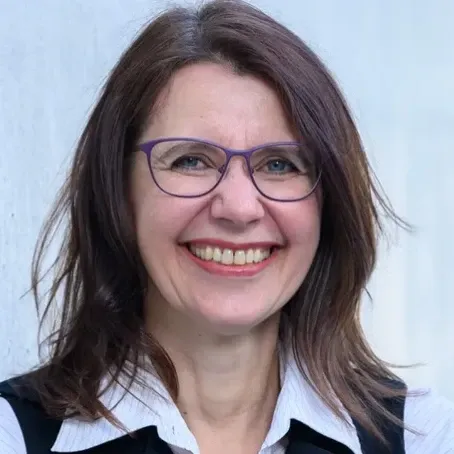
Portrait of Gitta Coaker

Gitta Coaker

Department of Plant Pathology
University of California, Davis

"From recognition to response in plant immunity."

My research focuses on innate immune perception and the spatial regulation of plant defense. We investigate how plants detect diverse pathogens and how these signals are translated into effective defense responses. Our work integrates plant and pathogen variation to guide the design of immune receptors with expanded recognition capacity.

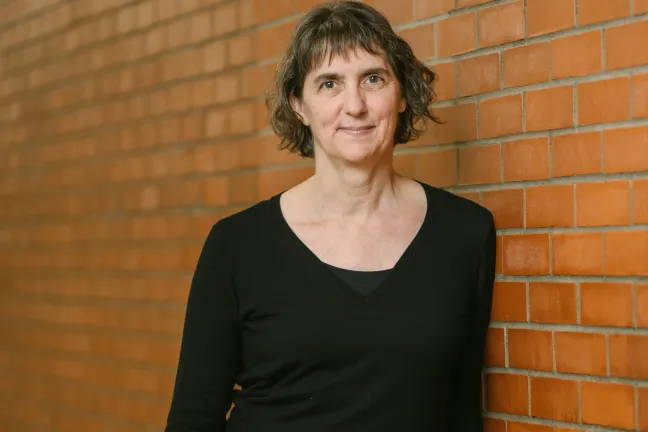
Portrait of Chikara Furusawa

Chikara Furusawa

Center for Biosystems Dynamics Research, RIKEN
Universal Biology Institute, The University of Tokyo

"Toward the Prediction and Control of Evolution: Low-Dimensional Phenotypic Dynamics and Evolutionary Steering in Bacteria."

I work at the interface of physics, biology, and evolution. My research combines theory, high-throughput experimental evolution, and quantitative data analysis to uncover universal principles governing robustness, plasticity, and evolvability in biological systems, with a particular focus on microbial adaptation, phenotypic constraints, and cellular state dynamics.

Portrait of Simon Gravel

Simon Gravel

Department of Human Genetics, McGill University and Victor Phillip Dahdaleh Institute of Genomic Medicine

"Genetics in large genealogies."

I am a population geneticist interested in the interplay of human demography, evolution, and disease. I develop mathematical models to integrate large-scale genomic and historical datasets, and am a scientific director of the CARTaGENE biobank, a longitudinal cohort in Quebec with a unique combination of genetic, genealogical, and environmental variables.

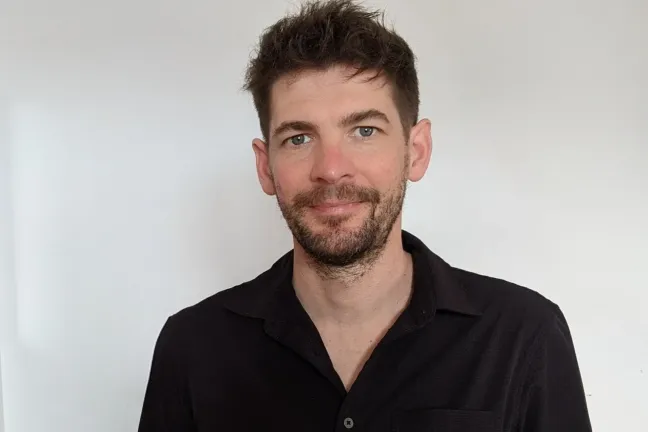
Portrait of Matthew Hahn

Matthew Hahn

Department of Biology and Department of Computer Science
Indiana University

"How gene trees can both mislead and enlighten." (President address)

I am generally interested in how to make evolutionary inferences from genetic data. We use statistical, computational, and empirical approaches, at both population genetic and phylogenetic scales.

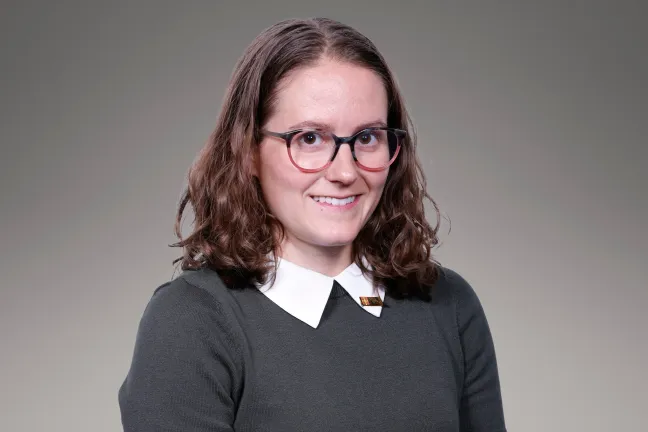
Portrait of Anna Lindholm

Anna Lindholm

Department of Evolutionary Biology and Environmental Studies
University of Zurich

"What is genomic conflict good for?"

I am interested in animal behaviour and meiotic drive, and particularly how meiotic drive might affect animal behaviour and reproduction. My study system is the t haplotype in wild house mice.

The road to June 2027

From here
to Québec.

Submissions, registration, and on-site milestones, in chronological order. All deadlines are 23:59 Eastern Time. Subscribe at info@smbe2027.org to be notified at each deadline.

Submissions

Call for symposia opens
20 August 2026
Call for symposia closes
20 September 2026
Abstract submission opens
20 November 2026
Abstract deadline
1 February 2027
Selection notice, first round
1 March 2027
Selection notice, second round
15 March 2027

Registration

Early bird opens
20 October 2026
Early bird deadline
30 March 2027
Oral presenter registration
30 March 2027
Regular registration with banquet
1 May 2027
Poster presenter registration
30 May 2027
Regular registration without banquet
20 June 2027

Awards & on-site

Award applications open
20 November 2026
Award application deadline
1 February 2027
Award notices begin
1 March 2027
Pre-meeting workshops
20 June 2027
Welcome reception
20 June 2027
Banquet at Le Manège militaire
23 June 2027
Conference closes
24 June 2027 · 1pm

Local organizing committee

Hosting
the world.

Eight scientists from Université Laval and Université de Montréal, coordinating the meeting on the ground. Operational support by NeoEvents in Québec City.

Portrait of Christian Landry

Christian Landry

Co-Chair · Professor

Université Laval
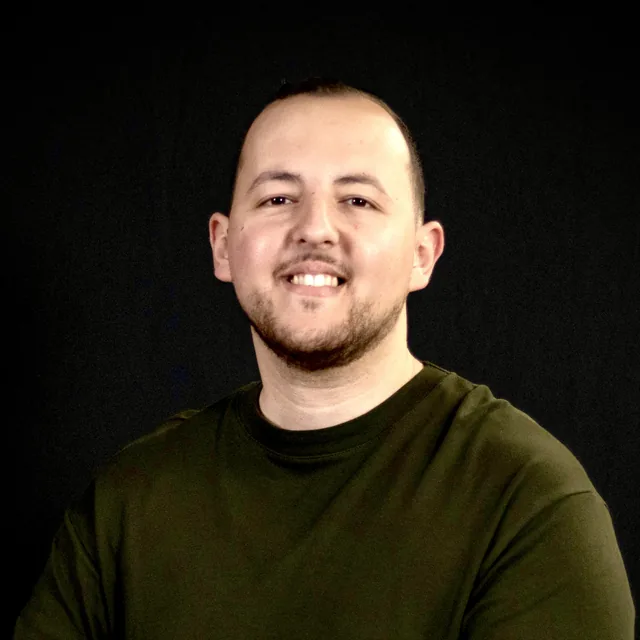
Portrait of Nadia Aubin-Horth

Nadia Aubin-Horth

Co-Chair · Professor

Université Laval

Portrait of Jullien Flynn

Jullien Flynn

Assistant Professor

Université Laval

Portrait of Jean-Baptiste Leducq

Jean-Baptiste Leducq

Assistant Professor

Université Laval

Portrait of Edel Pérez López

Edel Pérez López

Associate Professor

Université Laval

Portrait of Gabriel Renaud

Gabriel Renaud

Associate Professor

Université Laval

Portrait of Sophie Breton

Sophie Breton

Professor

Université de Montréal

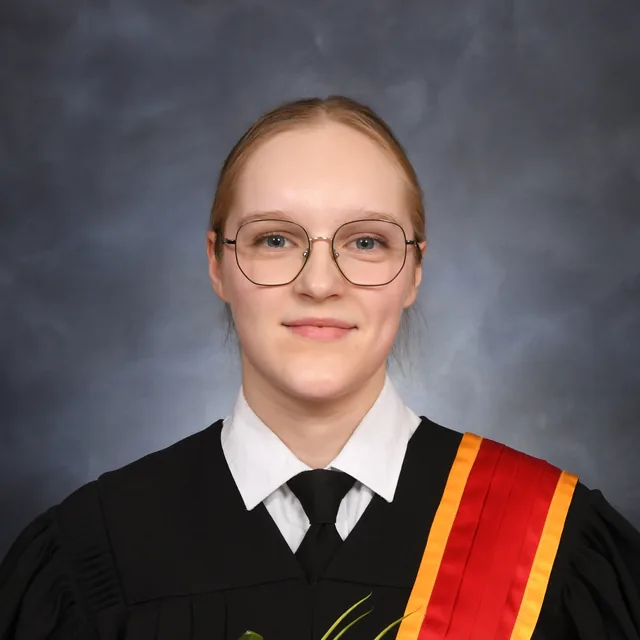
Portrait of Camille Bédard

Camille Bédard

PhD student

Université Laval

Graduate students & post-doctoral fellows committee

Portrait of Laurence Bélanger

Laurence Bélanger

Leducq Lab

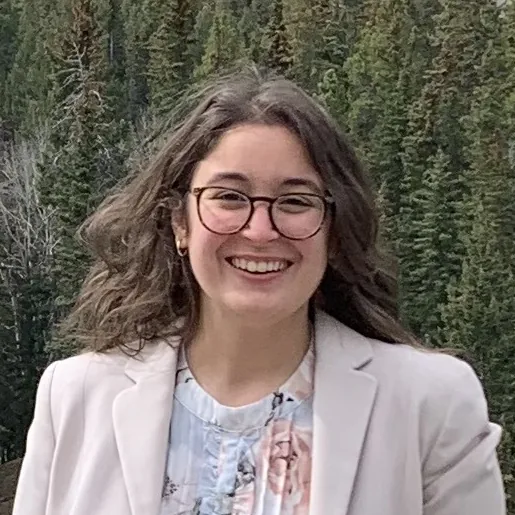
Portrait of Gabriela Bernal Astrain

Gabriela Bernal Astrain

Landry Lab

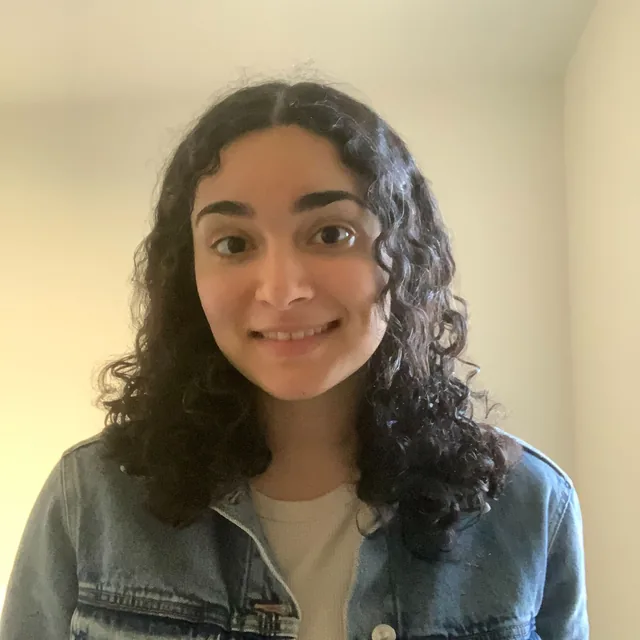
Portrait of Maribel Diaz

Maribel Diaz

Landry Lab

Portrait of David Jordan

David Jordan

Landry Lab

Portrait of Marie-Ève Picard

Marie-Ève Picard

Landry Lab

Portrait of Mathilde Roland-Caverivière

Mathilde Roland-Caverivière

Landry Lab

Portrait of María del Mar Varela Vasquez

María del Mar Varela Vasquez

Landry Lab

Portrait of Pavithra Venkataraman

Pavithra Venkataraman

Landry Lab

Portrait of Olivier Vermette

Olivier Vermette

Flynn Lab

Portrait of Oussama Yahmi

Oussama Yahmi

Leducq Lab

On the logo

A symbol of the place we gather.

The logo created for the 2027 meeting of the Society for Molecular Biology and Evolution in Quebec City was designed to reflect the connections between evolution, biodiversity, culture, and place within the goal of inclusivity and respect for the people in and around the city. It draws from a diversity of symbols deeply associated with Québec's landscapes and identities.

The silhouette of the Fairmont Le Château Frontenac anchors the logo within Québec City's skyline and immediately evokes the unique European style architecture of Quebec as the host city.

At the center of the composition, a sugar maple leaf (Acer saccharum) progressively transforms into a flying snow goose (Anser caerulescens). This transition uses local symbols to display themes of biodiversity, adaptation, and evolutionary change - all at the core of molecular biology and evolution. The maple leaf symbolizes the forests and traditional sugar maple production, while the snow goose signifies migration, movement, and ecological connectivity across the province. Together, these symbols bridge the gap between diverse aspects of Canada's culture, existing within First Nations, Quebecois, and Anglo-Canadian traditions.

Forming the foundation of the composition are eleven flossing blue-grey lines, meant to represent the St. Lawrence River. The Saint-Lawrence is a defining geographical feature of Québec and one of North America's great ecological corridors. Simultaneously, the eleven lines also symbolize the eleven First Nations of Québec, and recognize their enduring contributions to the province's development. It is also a nod to the province's name; the word Quebec famously comes from the Algonquin term for "where the river narrows" in reference to the narrowing of the river around Quebec City. This triple symbolism demonstrates the interplay between communities, landscapes, history, and living organisms.

Text credit: Ethan Alexander Yarus, Jean-Baptiste Leducq

Our commitments

Designed
with care.

Inclusive at every level.

  • Travel grants and carer grants for those who need them.
  • Free childcare on site, as is customary at SMBE meetings.
  • Discounted registration for participants studying or working in Low- and Middle-Income Countries.
  • Accessible facilities at every venue; a published Code of Conduct and a Safe Behavior Officer on site.
  • An opening ceremony recognising the First Nations on whose unceded territory we gather.

Sustainable at the source.

  • Plastic-free delegate materials; water served from pitchers.
  • Plastic-free, low-waste meals, with at least 80% of waste recovered or composted; surplus food donated.
  • Complimentary weekly RTC transit passes for every registered participant.
  • Hotels prioritised within walking distance or along major transit routes.
  • Online access to sessions for members who choose not to travel.

Partners & sponsorship

Build SMBE 2027 with us.

We're talking with potential partners (companies, foundations, and institutions whose work touches molecular biology and evolution) about supporting the meeting and reaching the international research community gathered in Québec City. The full prospectus will be available soon. In the meantime, write to us at smbe2027@neoevents.ca.

Stay close to the work

Be there in June.

Registration opens 20 October 2026. Abstract submission opens 20 November 2026. The full programme follows in early 2027.